Template guide · Sidebar profiles · opens Orbit
Bridges the military-civilian language gap. This template translates your service experience, leadership roles, and operational expertise into terms that civilian hiring managers understand and value.
Build, edit, and preview free. Finished resume downloads require a purchase. See download options.
Spec sheet
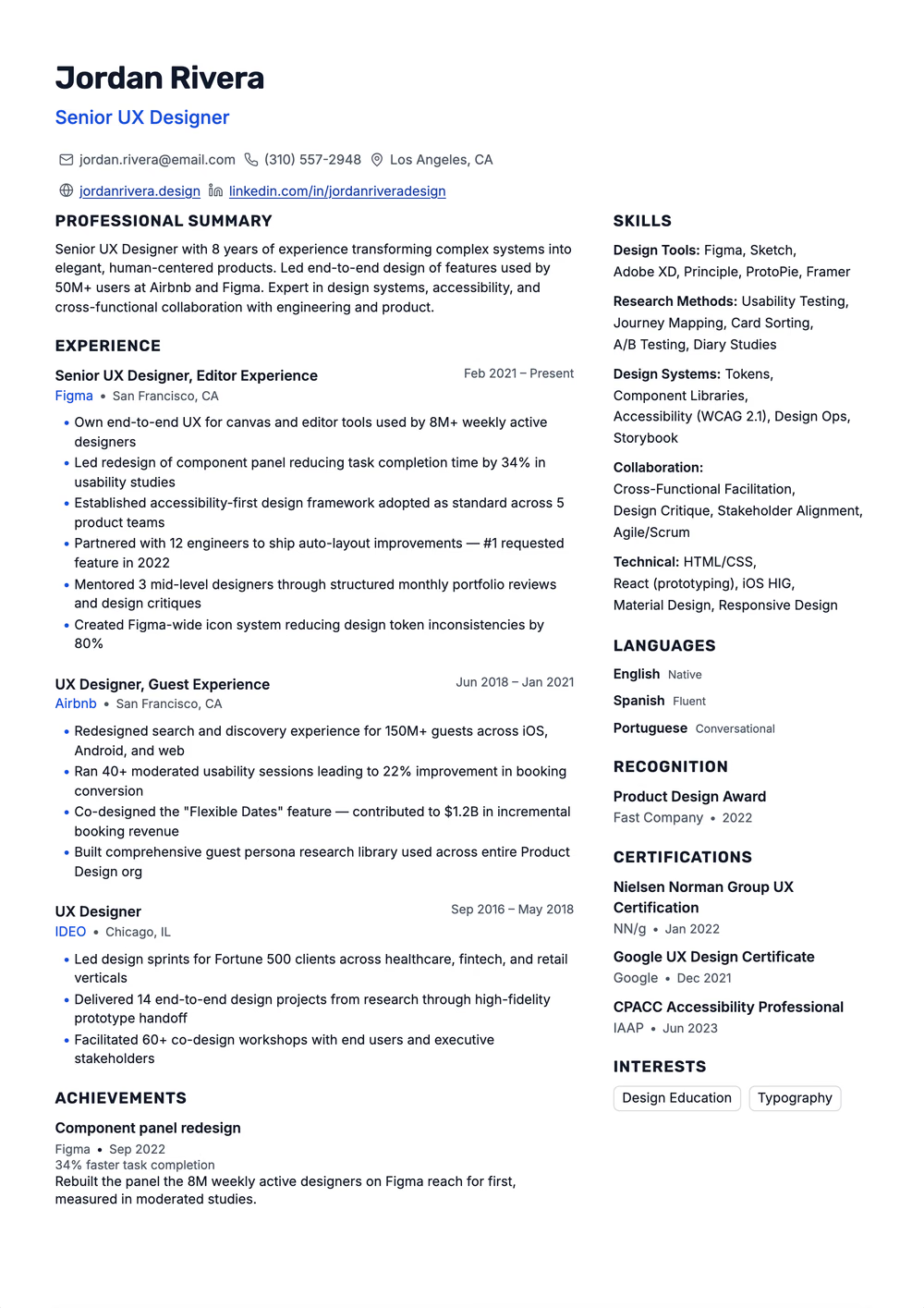
Two-column resume with spacious experience and achievement entries, grouped skills and a concise supporting sidebar
Why this shape
Military experience is powerful but often gets lost in translation. Civilian recruiters may not understand MOS codes, unit designations, or military rank structures. This template provides a framework for translating your service into civilian career language while preserving the leadership, operational excellence, and mission-critical decision-making that make veterans exceptional hires.
Read before you apply through hiring software
Applying through an online job portal? Use a single-column template for the portal, and keep this one for emailing a recruiter or handing over in person.
Open the ATS-Optimized guideRead by the machine
A rail that some hiring software reads into the main column.
Declared layout score
80/100
A structural rating the template declares, not your odds.
Hiring-software test
Not tested yet
We have not run this test on this design yet. Its layout facts still come from the design itself.
Word export
Word export as a single-column file
Filled in
The example resumes on this site are rendered in a fixed set of designs, and this one is not in it yet. Browse the examples for your role; the writing advice applies to any design.
Replace rank with a civilian equivalent that conveys scope: an O-3 (Captain) managed 100+ personnel, so use 'Operations Manager' or 'Team Director' as context. For MOS, describe what you actually did: '25B Information Technology Specialist' becomes 'IT Systems Administrator.' Avoid military jargon entirely — write for someone who has never served.
Yes, if it's active or recently expired. An active Top Secret or TS/SCI clearance is extremely valuable to defense contractors, government agencies, and companies in regulated industries. List the clearance level and status (Active, Current, or date of last investigation). Don't include specific classified programs or intelligence details.
Every military role involves leadership, logistics, operations, training, or risk management — all highly valued in corporate settings. Focus on transferable skills: managing budgets (even equipment budgets), training teams, planning operations (project management), ensuring compliance (regulatory management), and performing under pressure (crisis management). Quantify everything: personnel managed, budget responsibility, and operational outcomes.
Use it now
Build, edit, and preview free. Change the design without retyping your content. Finished resume downloads require a purchase.
