Template guide · Clean and direct · opens Keystone
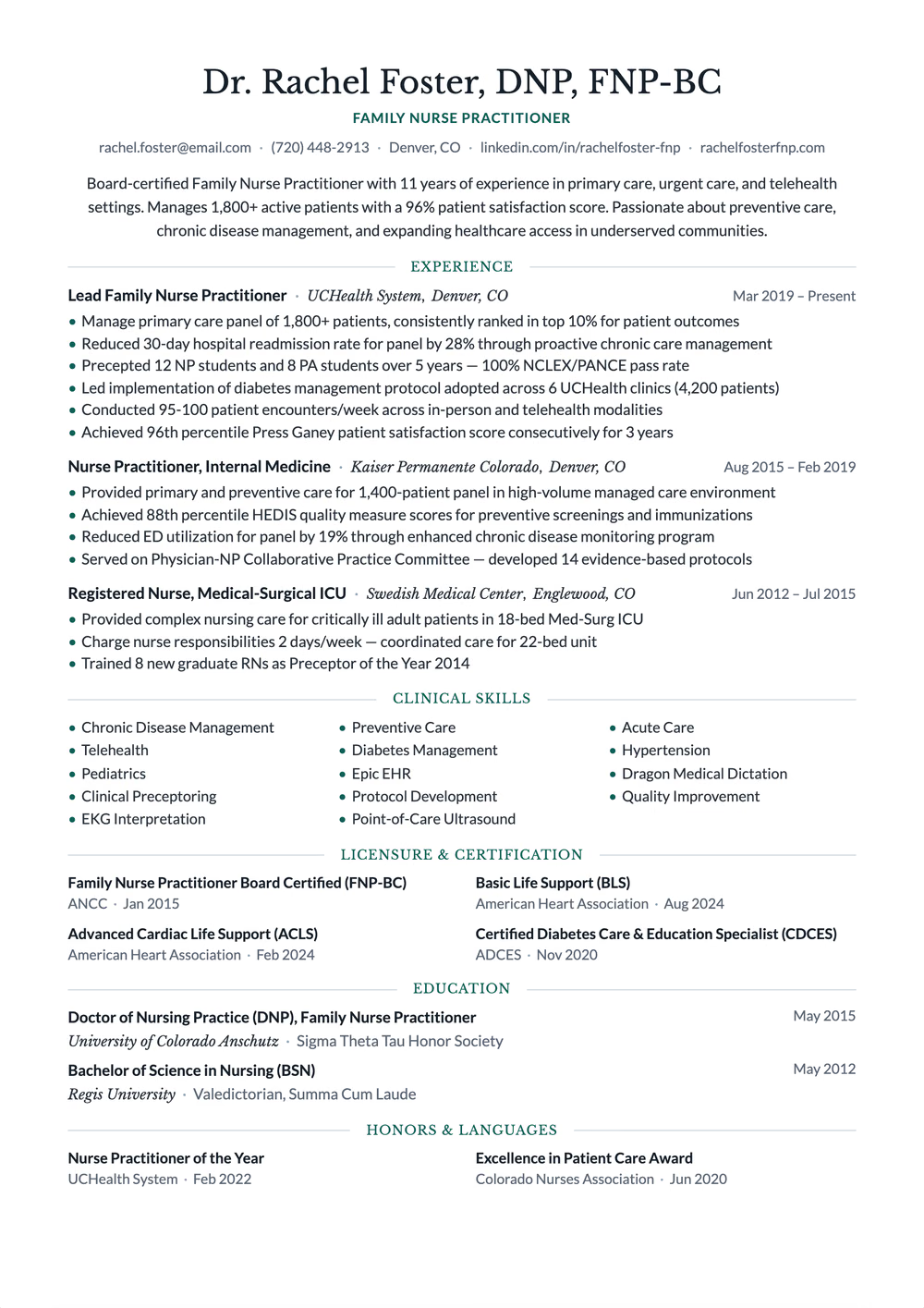
Designed for healthcare professionals who need to present licensure, certifications, and clinical experience in a format hiring managers scan efficiently. It is one column with no photo or graphics, so a hospital application portal reads it in a single order.
Build, edit, and preview free. Finished resume downloads require a purchase. See download options.
Spec sheet
Centred classic single-column resume: a Baskerville name, section titles between hairlines, one-line job headings with dates on the right, and skills in three columns
Extraction certified
Why this shape
Healthcare hiring moves fast and follows strict compliance requirements. Your resume needs to surface licensure status, active certifications, and clinical experience immediately. This template puts credentials front-and-center with dedicated sections for licensure, BLS/ACLS/specialty certifications, EHR proficiency, and unit-specific clinical experience.
Read by the machine
One reading order, top to bottom.
Declared layout score
90/100
A structural rating the template declares, not your odds.
Hiring-software test
Passed
A dense sample export came back with every section intact on Letter paper, Oct 17, 2026.
Word export
Word export as a single-column file
Filled in
The example resumes on this site are rendered in a fixed set of designs, and this one is not in it yet. Browse the examples for your role; the writing advice applies to any design.
Include your license type, state, and expiration date. Whether to include the actual license number depends on your comfort level — it's publicly verifiable anyway, but some professionals prefer to share it only upon request. Always include license status (active, compact, multi-state) and the issuing state.
Start each role with context: facility type (Level I trauma center, community hospital), unit (ICU, med-surg, OR), bed count, and patient population. Then describe your responsibilities and achievements with metrics: patient-to-nurse ratio, procedures performed, patient satisfaction scores, quality improvement outcomes, and error reduction initiatives.
You should tailor your resume for different specialty areas, but the core structure stays the same. Emphasize the certifications, clinical skills, and patient populations most relevant to each role. An ER nurse applying for an ICU position should highlight critical care experience, hemodynamic monitoring, and ventilator management over triage and rapid assessment.
Use it now
Build, edit, and preview free. Change the design without retyping your content. Finished resume downloads require a purchase.
