Search committees, grant panels, and fellowship directors judge your Curriculum Vitae by typographic clarity and citation rigour. Build a multi-page scholarly dossier with dedicated sections for peer-reviewed publications, grants, teaching, and clinical rotations, with US Letter and A4 layout options.
Manual editing, previewing and Plain-text downloads are free. PDF and Word downloads require One Resume, a resume pack or Pro. AI features have separate allowances. Check prices and allowances.
Full-width bibliography & DOI alignment
Single-column scholarly layouts keep long journal titles, author lists, and DOIs unbroken across lines.
Clean multi-page pagination rules
Section headers never strand at the bottom of a page; multi-page publication lists flow with consistent margins.
Dedicated Research, Grants & Teaching blocks
Separate peer-reviewed papers, preprints, extramural funding (with PI/Co-PI role), and advising.
One-click Academic CV ↔ Industry Resume switch
Duplicate your scholarly dossier and switch to a compact 1-to-2 page R&D template for industry lab roles.
5 Shipped Scholarly Designs
Every preview below is rendered from Guul's live pagination engine—what you see on the card illustrates the design. Review your own document’s typography, spacing, and exported PDF.
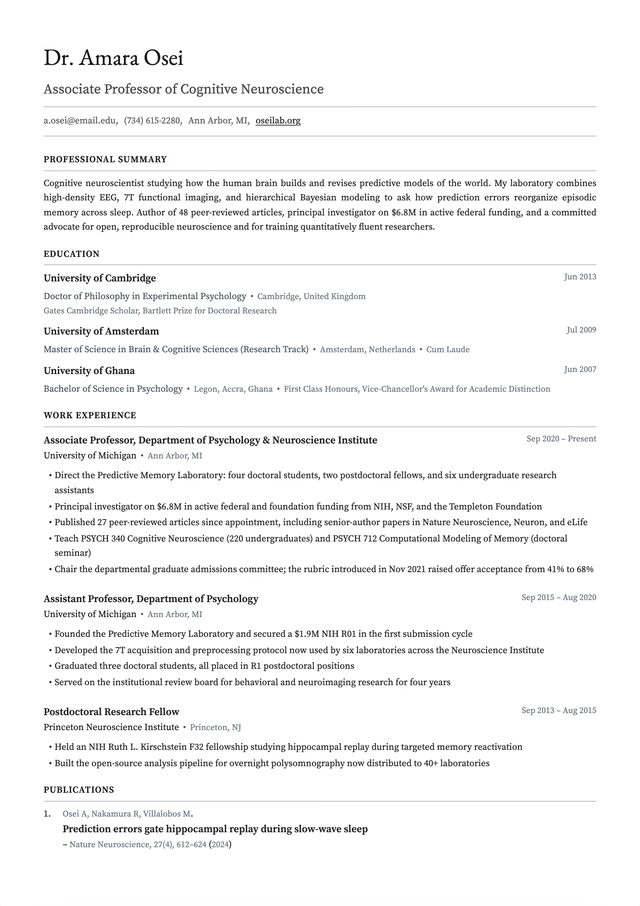
Humanities · Social Sciences · Faculty Dossiers
Typography: Editorial serif hierarchy with full-width publication and grant entries
Assistant/Associate Professor searches, postdoctoral fellowships, and national research council applications requiring multi-page bibliographies.
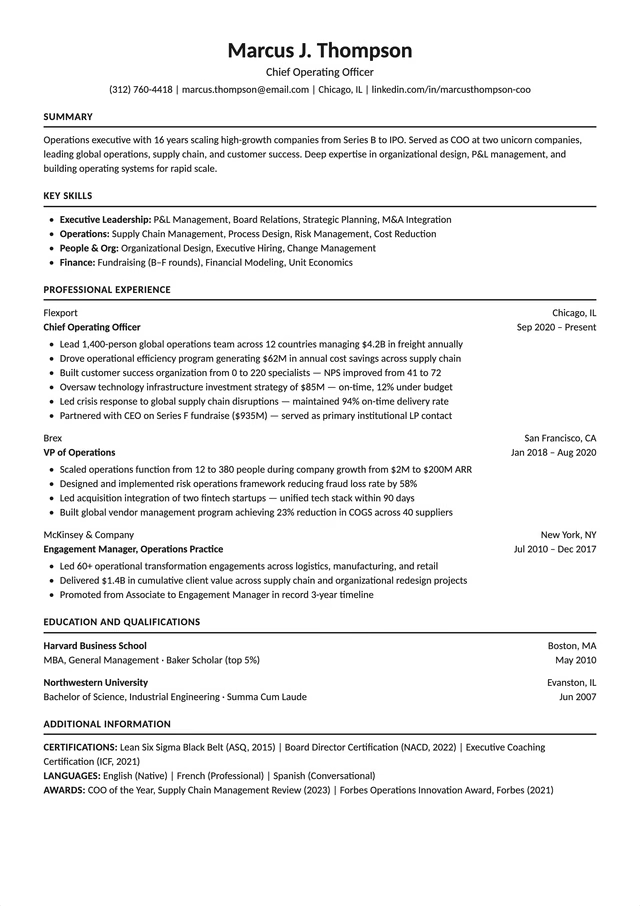
Tenure & Promotion · Senior Principal Investigators
Typography: High-contrast scholarly headings with crisp date-margin alignment
Departmental promotion packets, endowed chair nominations, and PI biosketches balancing external funding, doctoral supervision, and service.
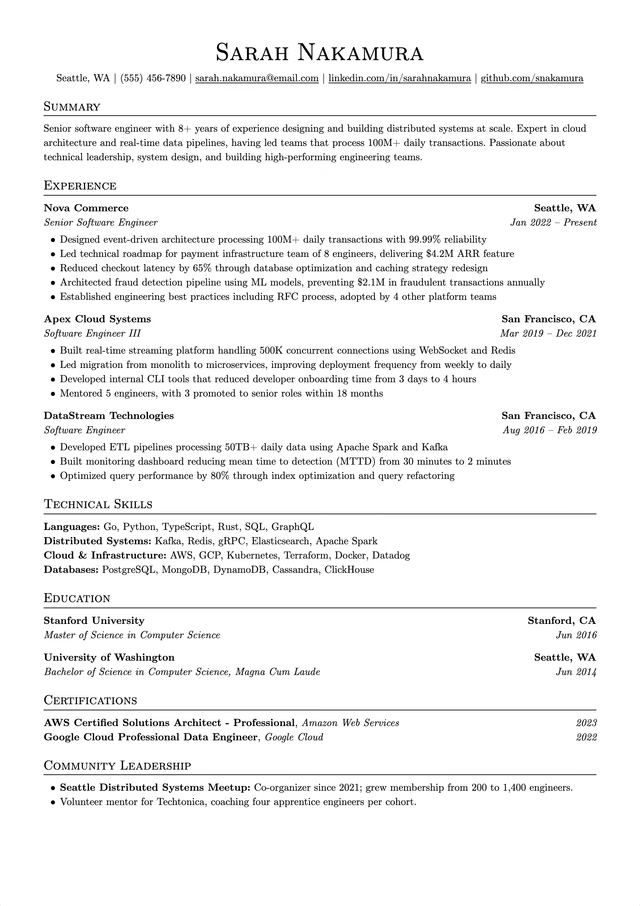
Mathematics · Computer Science · Quantitative Labs
Typography: Precision tabular alignment inspired by classic Computer Modern / TeX layouts
ML research scientists, quantitative researchers, and systems PhDs applying to both university labs and frontier industrial research groups.
Medicine · Clinical Fellowships · Academic Hospitalists
Typography: Structured single-column hierarchy for board licensure, trials, and PubMed citations
Residency and fellowship applicants (ERAS supplement), physician-scientists, and clinical trial investigators.
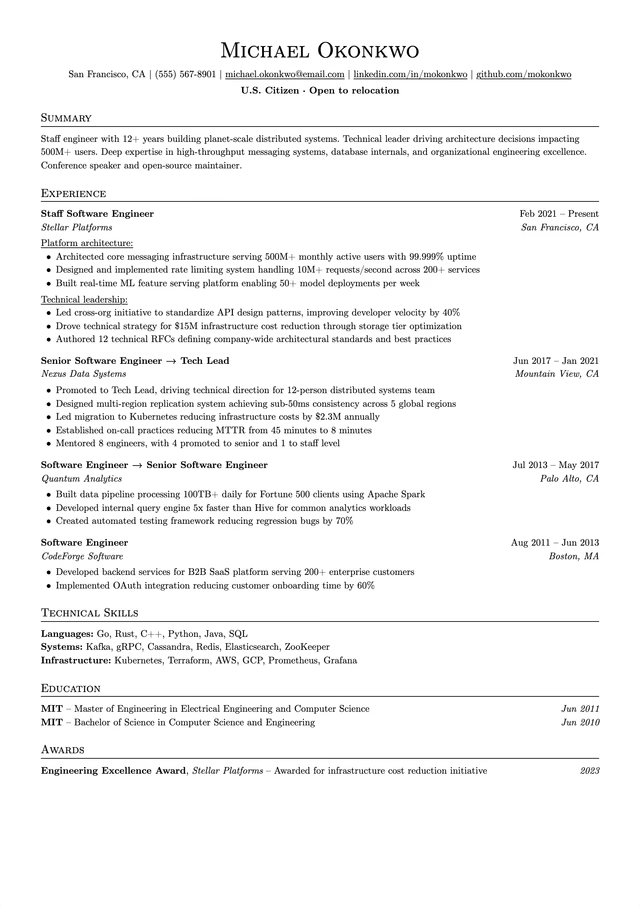
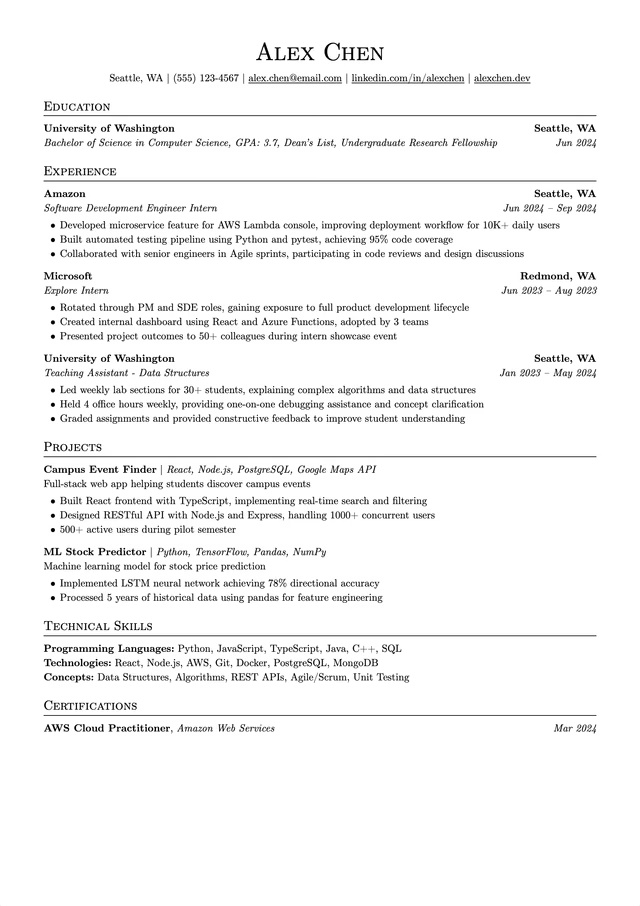
PhD Admissions · Master’s Research · NSF / ERC Grants
Typography: Balanced spacing that elevates honours theses, lab techniques, and preprints
Undergraduate and Master’s researchers applying to doctoral programs, Fulbright fellowships, or summer research institutes.
An R1 search committee looks for extramural funding and first-author papers on page one; a liberal arts teaching committee looks for courses designed as Instructor of Record. Use the canonical order below for your target track.
Applying to both university faculty openings and industrial research labs? Keep two linked versions and translate scholarly sections using this table:
| Scholarly Element | On an Academic CV (3–10+ Pages) | On an Industry R&D Resume (1–2 Pages) |
|---|---|---|
| Doctoral Research | Listed under Education with dissertation title, committee members, and lab group. | Listed under Work Experience as “Graduate Research Scientist” with quantified throughput, model accuracy, or assay scale. |
| Publications | Complete chronological bibliography of every peer-reviewed paper, chapter, and preprint. | Condensed “Selected Publications & Patents (3–5 items)” naming top-tier venues (e.g., NeurIPS, Nature, IEEE) and citation count. |
| Grants & Fellowships | Full agency codes (NIH R01, NSF CAREER, ERC), grant numbers, and award periods. | Framed as competitive funding won ($X secured across N multi-institution proposals) and budget leadership. |
| Teaching & Advising | Every course code, semester enrollment, and thesis student mentored. | Framed as technical mentorship, team onboarding, and executive stakeholder communication. |
When to send a 1-page resume, a 2-page UK/EU CV, or a multi-page scholarly dossier.
Read guideFormatting coursework, Latin honours, dissertation titles, and advisor names.
Read guideTemplates and bullet formulas for undergrad researchers, Master’s students, and first-time applicants.
Read guideUnlike an industry resume (which is 1 to 2 pages), an academic Curriculum Vitae has no page ceiling because it is a complete, cumulative record of your scholarly work. Early-career PhD candidates and postdocs typically submit 2 to 4 pages, assistant professors 4 to 8 pages, and senior faculty or physician-scientists 10+ pages.
Use a consistent citation style across your entire CV (APA, Chicago, Vancouver/AMA for medicine, or IEEE/ACM for computer science) and bold your own name in every author list so search committees can see your authorship position (first author, equal contribution *, or corresponding/senior author) at a glance. Always include the DOI or arXiv/PubMed identifier.
Separate your bibliography into clear sub-headings: "Peer-Reviewed Journal Articles & Proceedings", "Manuscripts Under Review / Revisions Requested" (include preprints with an arXiv, bioRxiv, or SSRN link), and, for early-career scholars only, a brief "Working Papers" subsection for manuscripts with a complete draft ready to share upon request.
To transition from academia to industry (such as applied AI, biotech, quant finance, or policy), compress your multi-page publication list into a "Selected Publications & Patents (3–5 items)" section, reframe your doctoral research as full-time R&D engineering or data science experience with measurable outcomes, and move technical skills and systems built into the top third of page one.
