Template guide · Sidebar profiles · opens Vector
Purpose-built for software engineers, hardware engineers, data scientists, and technical professionals. Structured sections for technical skills, project contributions, and measurable engineering impact.
Build, edit, and preview free. Finished resume downloads require a purchase. See download options.
Spec sheet
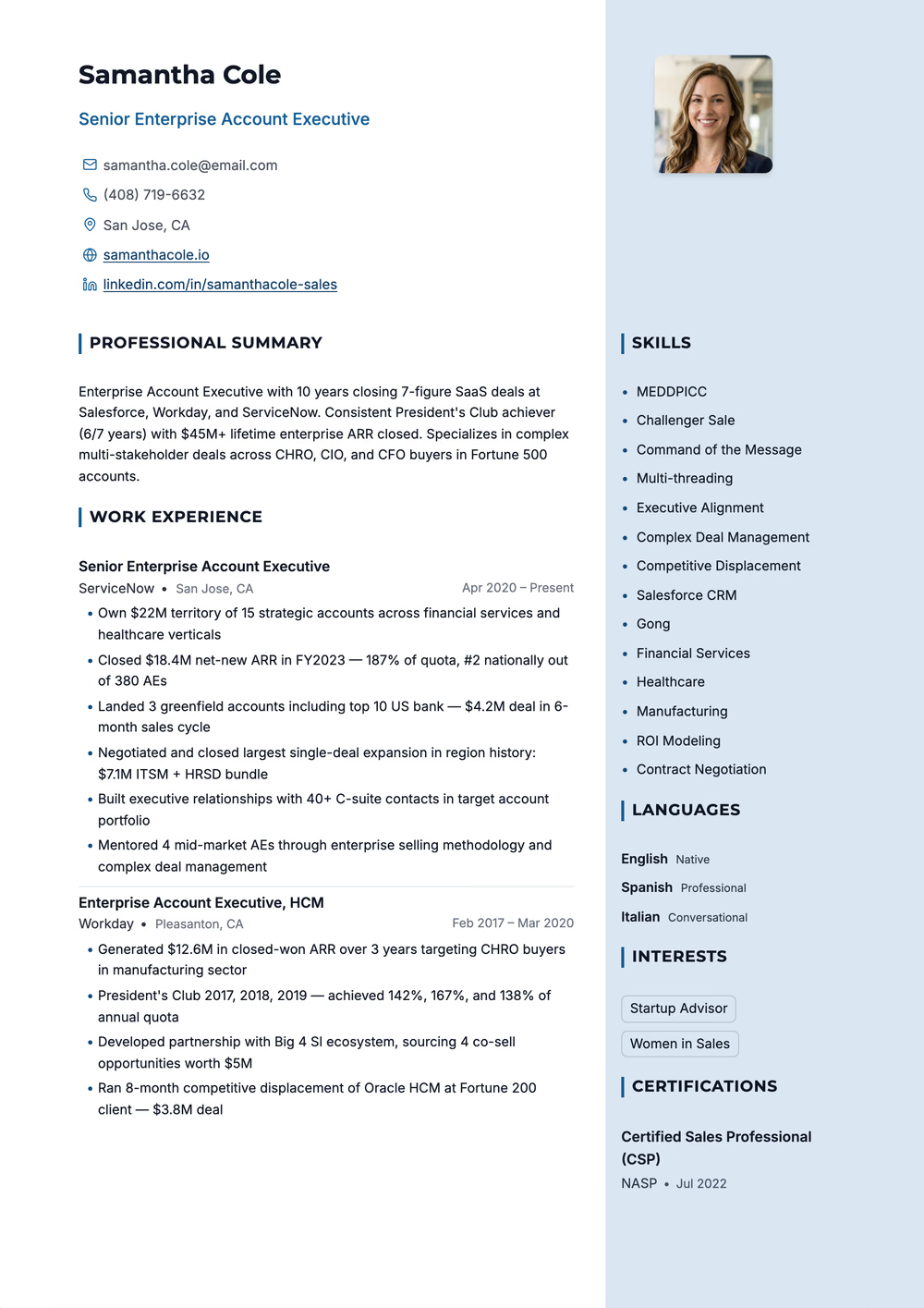
Analyst two-column resume in steel blue — a right-hand profile rail for photo and a plain skills list, Montserrat headings with left-border titles
Extraction certified
Why this shape
Engineering resumes require a different structure than business resumes. Hiring managers and technical screeners look for specific skills, system scale, and measurable impact. This template provides dedicated sections for technical skills organized by category, project contributions with architecture context, and quantified performance improvements.
Read before you apply through hiring software
Applying through an online job portal? Use a single-column template for the portal, and keep this one for emailing a recruiter or handing over in person.
Open the ATS-Optimized guideRead by the machine
A rail that some hiring software reads into the main column.
Declared layout score
80/100
A structural rating the template declares, not your odds.
Hiring-software test
Passed
A dense sample export came back with every section intact on Letter paper, Oct 17, 2026.
Word export
Word export as a single-column file
Filled in
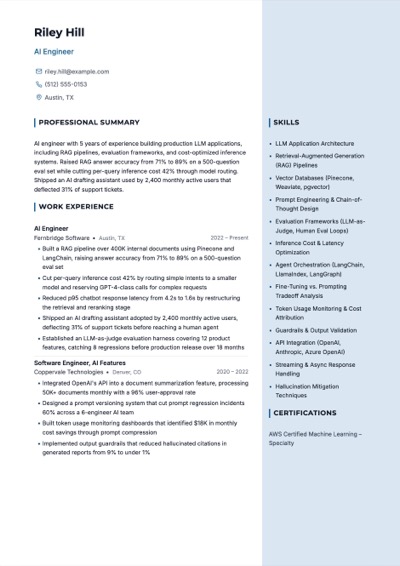
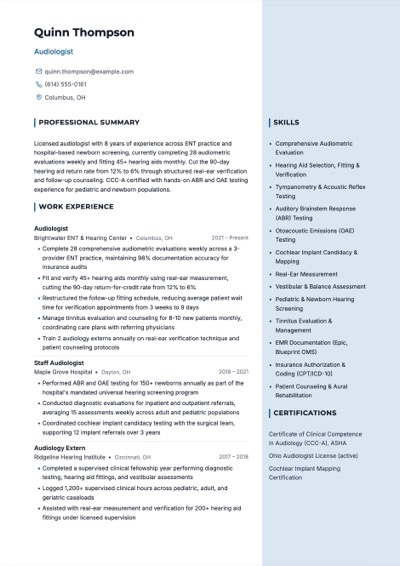
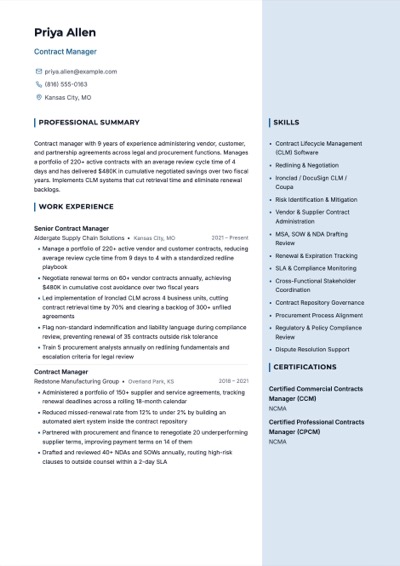
24 fictional examples use this exact design. Open one to read the full sample as text, then replace its details with your own experience.
No. List technologies you can discuss confidently in a technical interview. Organize by category: Languages, Frameworks, Cloud/Infrastructure, Databases, and Tools. Prioritize technologies mentioned in the job description. A focused list of 15-20 relevant technologies is stronger than a wall of 50 that dilutes your expertise.
Use the pattern: 'Built/Improved what using technologies, resulting in measurable outcome'. Include metrics like latency reduction (p50, p95, p99), throughput improvements (requests/second), cost savings, uptime percentages, user growth, or deployment frequency. If you worked on a system, mention its scale — daily active users, data volume, or transaction count.
Yes, if your GitHub has meaningful activity — contributions to open-source projects, well-documented personal projects, or consistent commit history. Pin your best 4-6 repositories. If your GitHub is mostly empty forks or school assignments, leave it off and focus on professional experience instead.
Use it now
Build, edit, and preview free. Change the design without retyping your content. Finished resume downloads require a purchase.